

European Green Crab
Carcinus maenas
What it is
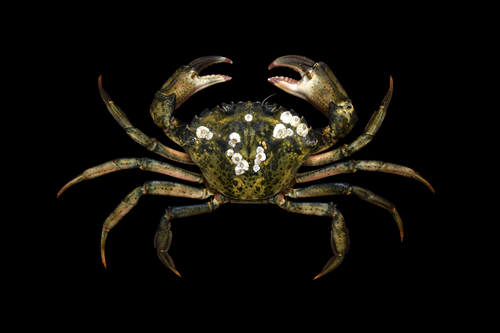
The European Green Crab is a small, invasive shore crab known for its variable coloration, which can range from mottled green to brown, yellow, or red. It typically has five prominent spines on each side of its shell behind the eyes, and three small bumps between the eyes. Originally from Europe, it has become a highly successful invasive species in many parts of the world.
Rule out the lookalikes
- Safety note
- If you see one, it's best to look with your eyes and not touch, as they can pinch with their claws!
Where and when to find it
- Habitat
- Tide pools, rocky shores, mudflats, salt marshes, and estuaries along coastlines. It can live in both salty and brackish water.
- How to find it
- Check under rocks and seaweed in tide pools or along muddy shores when the tide is out. They are very good at hiding!
- Best time of day
- Low tide
- Best season
- Spring to fall
How it lives
- What it eats
- Worms, clams, mussels, smaller crabs, and dead animals. They are not picky eaters!
- What eats it
- Larger fish, birds (like gulls), otters, raccoons, and even some bigger crabs.
Worth knowing
- Female green crabs can lay over 150,000 eggs at once!
- They are very fast and can scuttle sideways up to 1 meter per second when escaping danger.
- Despite its name, it can be many colors, including green, brown, red, or yellow!
- It has five little spikes on each side of its shell, right behind its eyes.
- This crab is super tough and can live in salty ocean water or in water that's not quite as salty, like in rivers near the sea.
Why it matters
While native to Europe, this crab is an 'invader' in many new places. It eats so many things that it can change the balance of other animals living there.