Try it free

For parents: a bug hunt you can do in any yard

Backyard bug hunt: bugs and spiders kids can find

No group is easier for a first nature hunt than bugs. Any yard, balcony planter or park edge has dozens, and kids can get close. Flip a board, check under a leaf, look at the porch light or walk slowly through tall grass.

This guide covers the bugs and spiders kids are most likely to find, which ones are safe to get near, and what to do about the few that bite or sting. Every bug your kid photographs and identifies becomes a card in their Dex.

How to run a backyard bug hunt

  1. Check four spots: flowers (bees and butterflies), leaves (beetles), the ground under boards and stones (slugs and beetles), and webs (spiders).
  2. Go out on a warm, sunny day for butterflies and dragonflies. Go after rain or at dusk for slugs and moths.
  3. Gently lift boards and stones, then put them back the way you found them.
  4. Look, then snap. Use zoom for bees and spiders instead of reaching in.

Start here: 12 bugs and spiders

Common, easy to recognize, and found in many backyards. The spider cards answer the question kids ask first: is it dangerous?

Spinybacked Orbweaver

Gasteracantha cancriformis

How to recognize it
A small spider with a hard, shiny white or yellow back and six red or black spikes, like a tiny crab.
Where and when
Southern gardens, shrubs and woods edges in summer and fall, in small round webs at eye level.
Lookalike
Other orbweavers have soft, round bodies and no spikes.

Snap it for your Dex: Is it poisonous? No. It is not dangerous to people. Bites are very rare and mild. Snap the web from the front.

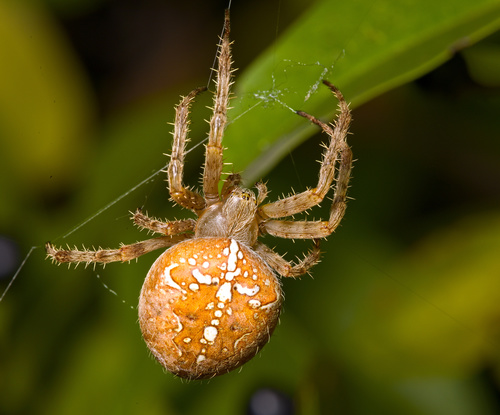
Cross Orbweaver (Araneus diadematus)
Photo: hedera.baltica, CC BY-SA · source

Cross Orbweaver

Araneus diadematus

How to recognize it
An orange-brown or gray spider with a white cross made of spots on its round back.
Where and when
Big round webs on porches, fences and shrubs, late summer and fall.
Lookalike
Spotted orbweaver: no white cross, and it hides in a leaf during the day.

Snap it for your Dex: Morning dew makes the web easy to see. Snap the spider in the middle of it.

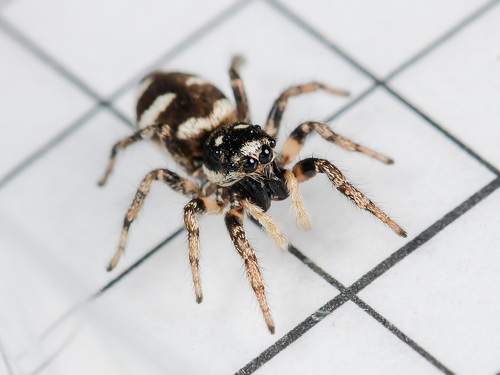
Zebra Jumping Spider (Salticus scenicus)
Photo: Анатолий Озерной /Anatoly Ozernoy, CC BY-SA · source

Zebra Jumping Spider

Salticus scenicus

How to recognize it
A tiny black-and-white striped spider that hops instead of crawls, with big front eyes.
Where and when
Sunny walls, window frames and fences, warm days.
Lookalike
Bold jumping spider: bigger, black with white spots.

Snap it for your Dex: It may turn to look right at your camera. Get low and snap it face to face.

Golden Silk Spider

Trichonephila clavipes

How to recognize it
A large spider with a long orange-brown body, feathery tufts on its legs, and golden silk in huge webs.
Where and when
Woods and yards in the Southeast, late summer and fall.
Lookalike
Yellow garden spider: black and yellow, with a zigzag stripe in the middle of its web.
Safety
Bites are rare and mild, but look and don't touch.

Snap it for your Dex: Snap from beside the web, not through it. The golden silk shows best in sun.

American Bumble Bee

Bombus pensylvanicus

How to recognize it
A big, fuzzy black-and-yellow bee, rounder than a honeybee.
Where and when
Flowers in sunny fields and gardens, late spring to early fall, in the East and Central US.
Lookalike
Carpenter bee: a shiny, bare black rear end.
Safety
Bees can sting. Never grab or swat one.

Snap it for your Dex: Bees are busy on flowers. Stand still, zoom in and snap from a step away.

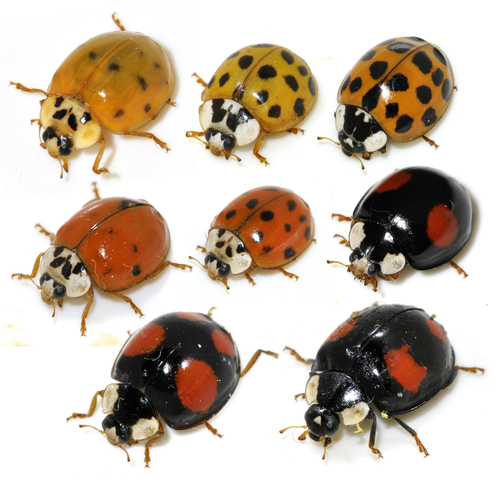
Asian Lady Beetle (Harmonia axyridis)
Photo: Francisco Welter-Schultes, Public domain · source

Asian Lady Beetle

Harmonia axyridis

How to recognize it
A round orange or red beetle with zero to many black spots and a black M or W mark behind its head.
Where and when
Leaves in summer. Sunny walls and window frames in fall.
Lookalike
Native lady beetles, like the convergent lady beetle, have no M mark.

Snap it for your Dex: Let it walk onto a leaf in the sun and snap it from above.

Isabella Tiger Moth

Pyrrharctia isabella

How to recognize it
The woolly bear caterpillar: fuzzy, black at both ends with a rusty orange middle. The moth is yellow-tan with tiny dark spots.
Where and when
Crossing sidewalks, trails and driveways in fall. The moths fly on summer nights.
Lookalike
Other fuzzy caterpillars. Some can sting or cause an itchy rash, so look and don't touch.

Snap it for your Dex: Folk tales say the orange band predicts the winter. It doesn't, but it is fun to check. Snap it mid-crawl.

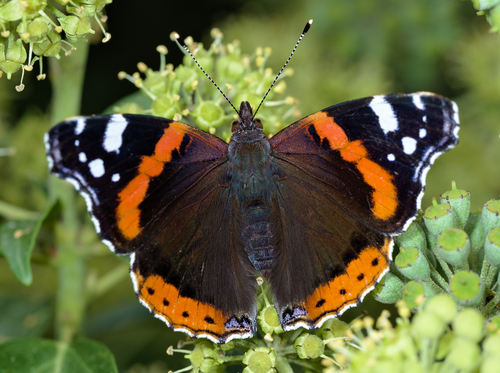
Red Admiral (Vanessa atalanta)
Photo: Gilles San Martin, CC BY-SA · source

Red Admiral

Vanessa atalanta

How to recognize it
A dark butterfly with bright orange-red bands across its wings and white spots near the tips.
Where and when
Sunny paths, gardens and flowers, spring to fall, all over the US.
Lookalike
Painted lady: orange and black patterns all over its wings.

Snap it for your Dex: Stand still on a sunny path. It may even land on you.

Gulf Fritillary

Dione vanillae

How to recognize it
A bright orange butterfly with black marks on top and silvery spots under its wings.
Where and when
Southern gardens with passion vine, spring to fall.
Lookalike
Monarch: bigger with black veins. Variegated fritillary: duller orange, no silver spots.

Snap it for your Dex: Wait near a flower patch. Snap the wings open, then try for the silver underside.

Common Whitetail

Plathemis lydia

How to recognize it
A chunky dragonfly. Males have a chalky white body and a dark band on each wing.
Where and when
Ponds, ditches and creek edges on warm sunny days, late spring to early fall.
Lookalike
Twelve-spotted skimmer: more dark spots on the wings.

Snap it for your Dex: Dragonflies return to the same perch. Aim at a stick by the water and wait.

Differential Grasshopper

Melanoplus differentialis

How to recognize it
A big olive-yellow grasshopper with black chevron marks on its back legs.
Where and when
Tall grass, fields and garden edges, summer and early fall.
Lookalike
Two-striped grasshopper: two pale stripes running down its back.

Snap it for your Dex: Walk slowly. When one lands, crouch down before you snap.

Leopard Slug

Limax maximus

How to recognize it
A big spotted gray slug that can grow as long as a grown-up's hand.
Where and when
Under logs and boards and in damp gardens, at night or after rain, spring and fall.
Lookalike
Garden slugs: smaller and plain gray or brown.
Safety
Wash your hands if you touch a slug.

Snap it for your Dex: Use a flashlight on a rainy night and snap it on a wet stone.

Make it a scavenger hunt

Print the free checklist with every find on this page, hand it to your kid with a pencil, and set a timer. Check off each one you spot. Or play it in the app: Spot it, Snap it, Collect it. Every photo becomes a verified card in your kid's Dex.

Or play it in the app

Full bug checklist

More bugs and spiders for the hunt, grouped the way kids sort them.

Butterflies and moths

FindWhere to lookWhen
American LadyVanessa virginiensisSearch in sunny areas with plenty of flowers.Spring through fall, active during warm, sunny daytime hours
Great Spangled FritillaryArgynnis cybeleLook for them visiting purple flowers like thistles or milkweed on a sunny day.Mid-morning to late afternoon, during summer
Variegated FritillaryEuptoieta claudiaLook for them fluttering over wildflowers in sunny, open areas.Sunny days, especially from late spring to fall
Pearl CrescentPhyciodes tharosLook for them in open, sunny spots with lots of wildflowers.Warm, sunny days from spring through fall, especially in the afternoon
Question MarkPolygonia interrogationisLook for them basking in sunny spots on leaves or tree trunks.Daytime, spring to fall
QueenDanaus gilippusLook for them in sunny fields, gardens, and open areas where milkweed grows.Daytime, especially sunny mornings and afternoons; spring to fall
Pipevine SwallowtailBattus philenorLook for the adult butterflies fluttering around pipevine plants or sipping nectar from other garden flowers.Daytime, spring through fall
Orange SulphurColias eurythemeLook for their bright orange wings fluttering over low-growing plants like clover.Sunny days, from spring through fall, especially midday
Small WhitePieris rapaeLook for them fluttering slowly over flowers or resting on leaves in sunny spots.Daytime, especially sunny periods; spring through fall
Eastern Tailed-BlueCupido comyntasLook for them fluttering low over clover and other small flowers in sunny spots.Daytime, especially sunny mornings and afternoons; spring to fall
Fiery SkipperHylephila phyleusLook for them darting quickly between flowers on sunny days.Daytime, especially sunny, warm periods; spring through fall
Silver-spotted SkipperEpargyreus clarusWatch for a fast-flying, brownish butterfly darting around flowers.Late spring through fall, on warm, sunny days
Zabulon SkipperLon zabulonLook for them quickly darting among flowers or resting on leaves.Sunny mornings and afternoons, from spring to fall
Ailanthus Webworm MothAtteva aureaLook for their silken webs on the leaves of Ailanthus trees (Tree of Heaven).Daytime for adults, summer and fall for webs
Eastern Tent Caterpillar MothMalacosoma americanaLook for distinctive white, silken 'tents' nestled in the forks of tree branches, especially in spring.Caterpillars are active in spring and early summer; moths emerge in late spring to mid-summer
Fall Webworm MothHyphantria cuneaLook for large, white, silky webs at the ends of tree branches in late summer and fall.Late summer and early fall, when their webs are most visible
Green Cloverworm MothHypena scabraLook near clover plants, especially at night or early morning.Nighttime and early morning, summer and fall
Salt Marsh MothEstigmene acreaLook for the white moths near lights at night.Moths fly at night during summer months

Dragonflies and damselflies

FindWhere to lookWhen
Blue DasherPachydiplax longipennisLook for them flying low over the water or perched on a stick, reed, or lily pad near the edge.Warm, sunny days, especially from late morning to late afternoon
Eastern AmberwingPerithemis teneraLook for them resting on plants near water edges or darting over the water.Sunny days, especially from late spring through early fall
Eastern PondhawkErythemis simplicicollisLook near calm water bodies.Sunny days from late spring to early fall
Eastern ForktailIschnura verticalisLook closely at reeds and grass blades near water.Sunny days, from late spring to early fall
Fragile ForktailIschnura positaLook for them resting on plants close to the water or flying low over the surface.Sunny days, from spring through early fall

Beetles, bees, flies and bugs

FindWhere to lookWhen
Brown-belted Bumble BeeBombus griseocollisLook for a fuzzy, black and yellow bee with a light yellowish-brown band on its back.Daytime, from spring to fall
Two-spotted Bumble BeeBombus bimaculatusLook for them on a variety of flowers during sunny days.Daytime, from spring to fall
Spotted Cucumber BeetleDiabrotica undecimpunctataLook for them on the leaves and flowers of squash, cucumbers, beans, and corn plants.Daytime, spring through fall
Brown Marmorated Stink BugHalyomorpha halysLook for them on plants with fruits or vegetables.Invasive. Smelly if squished.Daytime, especially in late summer and fall
Eastern Boxelder BugBoisea trivittataLook on the sunny sides of buildings, fences, and tree trunks, especially in the fall and early spring.Fall and early spring, especially on sunny afternoons
Margined CalligrapherToxomerus marginatusLook for them hovering near flowers, especially composites like daisies or asters.Spring through fall, active during sunny daytime hours

Spiders

FindWhere to lookWhen
Spotted OrbweaverNeoscona cruciferaLook for their large, circular webs strung between plants, trees, or structures.Dusk or night is when they build webs
American Nursery Web SpiderPisaurina miraLook for them on plants near water, in tall grass, or on fences.Daytime, especially during warmer months
Dark Fishing SpiderDolomedes tenebrosusLook for them on leaves or rocks by the water's edge, or even resting on the surface film of the water.Daytime; warmer months
Common House SpiderParasteatoda tepidariorumLook in the corners of rooms, under furniture, or near windows and doors.Harmless. Often indoors.All year round, especially noticeable indoors in cooler months

Bug safety: look, don't grab

  • Never grab bees, wasps or hornets. Most stings happen when they are squeezed or stepped on.
  • Most spiders are harmless. In the US, black widows and brown recluses are the two spiders whose bites matter, and both hide in dark, quiet corners. Don't reach into woodpiles or dark spaces without gloves.
  • Some fuzzy caterpillars sting or cause an itchy rash. Look at caterpillars, but don't pick them up.
  • If a sting causes swelling that spreads, trouble breathing, or your kid has a known allergy, get medical help right away.

Why kids keep going

Spot, Snap, Collect

Kids find something real outside and photograph it. That's the whole game, and it only works outdoors.

Every card is verified

HabitatLab checks each photo and identifies the species, so every card in the Dex is a real find your kid made, not a guess.

You see what they learned

The Grown-Up Field Report shows you what your kid found, the science behind it, and questions worth asking at dinner.

Questions parents ask

Is the spiny orb weaver poisonous?

No. The spinybacked orbweaver is not dangerous to people. Bites are very rare and mild. It is one of the safest and most fun spiders for kids to find.

What bugs can kids find in the backyard?

Lady beetles, bumble bees, butterflies like the red admiral, grasshoppers, dragonflies near water, and orbweaver spiders in late summer. After rain, look for slugs. Every card on this page is a common backyard find.

How do you do a bug hunt with kids?

Pick a sunny spot, check flowers, leaves, webs and under boards, and give kids 20 minutes. Bring the checklist and a phone for photos instead of a jar, so the bugs stay where they belong.

Is there an app to identify bugs for kids?

HabitatLab lets kids snap a bug and identifies it. Each verified find becomes a card in their Dex, which keeps the bug hunt going all season.