Try it free

For parents: plant identification for kids on any walk

Flowers, leaves and mushrooms kids can identify

Plants hold still, which makes them perfect for younger kids. A sidewalk, a vacant lot or a park path has wildflowers, tree leaves and, after rain, mushrooms. Kids can learn to name the plants on their own street in a few walks.

This guide shows the flowers, trees and mushrooms kids are likely to find, how to recognize each one, and the few that are dangerous. Read the safety box first. Every plant your kid photographs and identifies becomes a card in their Dex.

How to run a plant and leaf hunt

  1. Pick one street or path and look at three levels: the ground (clover, mushrooms), eye level (flowers, shrubs) and up high (tree leaves).
  2. Go back to the same spot each season. The same plant looks very different in spring flowers and fall color.
  3. Snap the whole plant, then a close-up of one flower or leaf. Two photos make identification easier.
  4. Hands off: look and snap only. No picking, crushing or tasting.

Start here: 12 flowers, trees and mushrooms

Easy to spot, common across much of the US, and good teachers. Several cards include a safety note, so read them together.

Goldenrods

Solidago

How to recognize it
Tall plants topped with plumes of tiny yellow flowers.
Where and when
Sunny fields, roadsides and park edges in late summer and fall.
Lookalike
Ragweed: green, not yellow, flowers. Ragweed causes most fall hay fever, not goldenrod.

Snap it for your Dex: Look for bees and beetles on the flowers. Two finds in one snap.

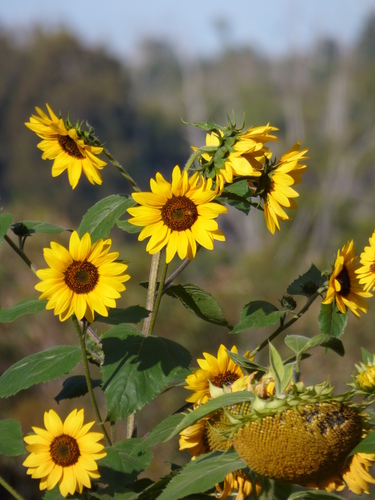
Sunflowers (Helianthus)
Photo: Forest and Kim Starr, CC BY · source

Sunflowers

Helianthus

How to recognize it
Tall stems with big yellow flower heads and a dark center.
Where and when
Fields, roadsides and gardens, summer to early fall.
Lookalike
Black-eyed Susan: much shorter, with fewer petals and a brown-black center.

Snap it for your Dex: Snap the whole flower head facing you, then a close-up of the center.

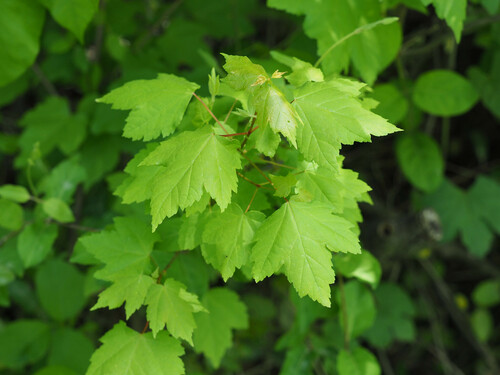
Red maple (Acer rubrum)
Photo: mefisher, CC0 · source

Red maple

Acer rubrum

How to recognize it
A tree with three-lobed, toothy leaves on red leaf stems. Bright red in fall.
Where and when
Yards, streets and wet woods across the East.
Lookalike
Sugar maple: leaves with smoother edges and U-shaped notches. It turns orange and yellow in fall.

Snap it for your Dex: Snap one leaf flat against your hand or the sky so the shape shows.

Eastern redbud

Cercis canadensis

How to recognize it
A small tree covered in pink-purple flowers in early spring, then heart-shaped leaves.
Where and when
Yards and woods edges in the East. Flowers in March and April.
Lookalike
Cherry and crabapple trees: open five-petal flowers and oval leaves.

Snap it for your Dex: In spring, snap the flowers growing right out of the bark. In summer, snap a heart-shaped leaf.

Chicory

Cichorium intybus

How to recognize it
Sky-blue flowers with square-tipped petals on stiff, almost bare stems.
Where and when
Roadsides, vacant lots and sidewalk cracks in summer. Go in the morning: the flowers often close by afternoon.
Lookalike
Cornflower: more ragged, frilly petals and a garden look.

Snap it for your Dex: Get low and snap a flower against the sky.

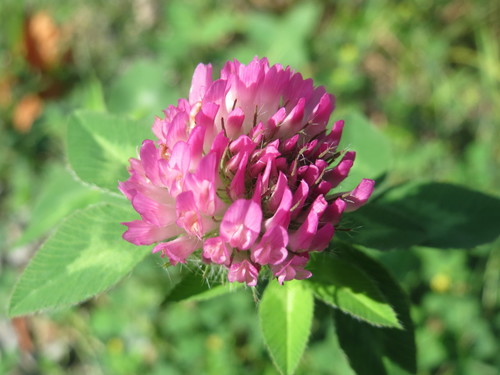
Red Clover (Trifolium pratense)
Photo: Andreas Rockstein, CC BY-SA · source

Red Clover

Trifolium pratense

How to recognize it
Round pink-purple flower heads, and leaves of three leaflets with a pale V mark.
Where and when
Lawns, fields and roadsides, spring to fall.
Lookalike
White clover: smaller white flower heads.

Snap it for your Dex: Snap a flower head and a leaf in the same picture.

Common jewelweed

Impatiens capensis

How to recognize it
Orange, spotted, trumpet-shaped flowers hanging like little jewels.
Where and when
Damp, shady edges and creek banks, summer to early fall.
Lookalike
Pale jewelweed: the same shape with yellow flowers.

Snap it for your Dex: Its ripe seed pods pop open when you touch them. Snap the flower first.

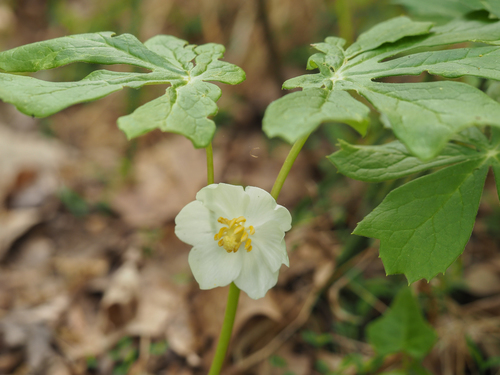
Mayapple (Podophyllum peltatum)
Photo: mefisher, CC0 · source

Mayapple

Podophyllum peltatum

How to recognize it
Umbrella-like leaves in patches on the forest floor, with one white flower hiding under a pair of leaves.
Where and when
Moist, shady woods in the East. Flowers in spring.
Lookalike
Few plants look like it. Stems with just one leaf are young mayapples that will not flower this year.
Safety
Mayapple is poisonous. Look and snap only.

Snap it for your Dex: Lift your camera under the leaves to snap the hidden flower.

Wild carrot

Daucus carota

How to recognize it
Flat, lacy clusters of tiny white flowers, often with one dark purple dot in the center, on hairy stems.
Where and when
Sunny roadsides and fields, summer and fall.
Lookalike
Poison hemlock: smooth stems with purple blotches. It is very toxic.
Safety
Never pick, crush or eat any plant that looks like this.

Snap it for your Dex: Snap from above to show the lace pattern and the center dot.

American pokeweed

Phytolacca americana

How to recognize it
A tall plant with bright pink-purple stems and drooping clusters of dark purple berries.
Where and when
Yard edges, fences and woods edges, late summer and fall.
Lookalike
Elderberry: flat clusters of small berries on a woody shrub. Still, never eat wild berries.
Safety
Pokeweed is toxic. Never eat the berries, leaves or roots.

Snap it for your Dex: Snap the pink stem and berry cluster together.

Dryad's Saddle

Cerioporus squamosus

How to recognize it
A big tan shelf mushroom with dark brown scales, like feathers, growing out of a tree.
Where and when
Dead or living hardwood trees and stumps, spring through fall, after rain.
Lookalike
Other shelf fungi grow on trees too. The feather-like scales are the clue.
Safety
Never eat wild mushrooms.

Snap it for your Dex: Snap the top, then the underside full of tiny holes.

Pear-shaped Puffball

Apioperdon pyriforme

How to recognize it
Small pear-shaped tan balls in clusters on rotting wood. Old ones puff brown dust from a hole in the top.
Where and when
Logs and stumps in damp woods, summer and fall.
Lookalike
Some young poisonous mushrooms look like puffballs from the outside.
Safety
Never eat wild mushrooms, and don't breathe in the dust.

Snap it for your Dex: Snap a whole cluster on its log.

Make it a scavenger hunt

Print the free checklist with every find on this page, hand it to your kid with a pencil, and set a timer. Check off each one you spot. Or play it in the app: Spot it, Snap it, Collect it. Every photo becomes a verified card in your kid's Dex.

Or play it in the app

Full plant checklist

More wildflowers, trees, ferns and mushrooms for the hunt.

Wildflowers and garden plants

FindWhere to lookWhen
California poppyEschscholzia californicaLook for vibrant orange or yellow cup-shaped flowers, especially when the sun is out.Daytime in spring and early summer when it's sunny
Common evening-primroseOenothera biennisLook for its tall stem and yellow flowers in sunny, open spots.Summer to early fall
Common selfhealPrunella vulgarisIt's a low-growing plant, so look close to the ground.Late spring through fall when its purple flowers are blooming
Common yarrowAchillea millefoliumLook for its distinctive fern-like leaves and flat-topped clusters of small white (sometimes pinkish) flowers.Blooms from late spring through fall, depending on your location
Ground-ivyGlechoma hederaceaLook for it in shady or partly shady areas.Spring and summer, especially when its small purple flowers are blooming
Red deadnettleLamium purpureumLook in open areas in early spring, especially where the ground has been dug up.Early spring, often March to May, during the day
Ribwort plantainPlantago lanceolataLook for a rosette of narrow, ribbed leaves growing close to the ground.Spring through fall, when it's actively growing
Wild geraniumGeranium maculatumSearch in deciduous forests during springtime.Spring, mainly April to June, when they are in bloom
Solomon's plumeMaianthemum racemosumLook for elegant arching stems with many small, star-shaped white flowers at the very end.Spring for flowers, late summer to fall for berries
White snakerootAgeratina altissimaLook for it in shady woods and along forest paths.Toxic if eaten. Look only.Late summer and fall, during the day
Carolina horsenettleSolanum carolinenseLook in sunny, open areas, especially where the ground has been disturbed.Toxic, with prickly stems. Look only.Blooms from late spring to late summer (May-September)
CatnipNepeta catariaLook for its fuzzy, heart-shaped leaves and square stem.Summer to fall
LavendersLavandulaLook for fields or gardens with long rows of purple flowers.Late spring to summer
Elegant ZinniaZinnia elegansLook for bright, round flowers in many colors like red, pink, orange, yellow, and white in sunny spots during summer.Summer to early fall
PartridgeberryMitchella repensLook for its small, round, dark green leaves growing low to the ground in shady forests.Winter, when its red berries stand out against the snow
Striped wintergreenChimaphila maculataSearch for it under trees in shady spots.Year-round, as its leaves are evergreen

Trees, shrubs and vines

FindWhere to lookWhen
American beechFagus grandifoliaLook for its very smooth, soft gray bark.All year
American sweetgumLiquidambar styracifluaLook for its distinct five-pointed star-shaped leaves and the spiky, round fruits (gumballs) on the ground below.Year-round for the tree, fall for colorful leaves and gumballs
American tuliptreeLiriodendron tulipiferaLook for its tall, straight trunk and distinctive four-lobed leaves (they look like a cat's head silhouette!).Flowers in late spring or early summer; yellow leaves in fall; unique leaf shape year-round
Box elderAcer negundoLook for its unique leaves, which have 3 to 5 (sometimes 7) leaflets, unlike most maples with one palm-shaped leaf.Spring and summer for leaves, fall for interesting seed clusters
Eastern redcedarJuniperus virginianaLook for its pyramid shape and dark green color, especially in winter.All year round, as it's an evergreen
SassafrasSassafras albidumLook for leaves with one lobe (oval), two lobes (like a mitten), or three lobes.Spring for new leaves and flowers, summer to enjoy its scent
Kousa dogwoodCornus kousaLook for its distinctive white or pink 'star-shaped' blossoms in late spring to early summer.Spring for blossoms, late summer to fall for fruit
American beautyberryCallicarpa americanaLook for them in sunny to partly shaded areas.Fall and winter for berries; summer for small pink or white flowers
Amur honeysuckleLonicera maackiiLook for tall, multi-stemmed bushes with oval leaves that stay green late into fall.Invasive in many states.Year-round, but especially in late fall when its green leaves stand out among bare trees, and its red berries are visible
Creosote BushLarrea tridentataLook for a medium-sized shrub with small, dark green leaves and small yellow flowers.Year-round; flowers are best seen in spring
Virginia creeperParthenocissus quinquefoliaLook for a climbing vine with five leaves together, like fingers on a hand.Five leaflets, not three. Still, learn poison ivy before touching vines.Year-round; bright red leaves are best seen in autumn

Ferns

FindWhere to lookWhen
Christmas fernPolystichum acrostichoidesLook for its dark green leaves, or 'fronds,' growing in clusters on the forest floor.All year; they are evergreen
Sensitive fernOnoclea sensibilisLook for its broad, light green, lacy fronds in moist, shady areas.Green fronds in spring and summer; spore fronds visible year-round, especially in fall or winter

Mushrooms and other fungi

FindWhere to lookWhen
Shaggy ManeCoprinus comatusLook in disturbed ground, like new lawns or areas where soil has been moved.Late summer and fall, especially after rain
Splitgill mushroomSchizophyllum communeLook for small, fan-shaped fungi growing directly on dead wood.Year-round, especially after rain
Crown-tipped coral fungusArtomyces pyxidatusLook closely on fallen logs and stumps in damp, shaded wooded areas.Summer and fall, especially after rain
Crowded parchmentStereum complicatumLook on downed logs, stumps, and dead branches in deciduous forests.Year-round, but most visible in damp conditions

Plant and mushroom safety (read this first)

  • Never eat wild plants, berries or mushrooms. Some deadly ones look like safe ones, even to adults.
  • Pokeweed and Carolina horsenettle are toxic. Look, snap and move on.
  • Wild carrot (Queen Anne's lace) has a dangerous lookalike, poison hemlock. Never pick or crush plants that look like it.
  • Learn 'leaves of three, let it be' for poison ivy, and wash hands after a plant hunt.

Why kids keep going

Spot, Snap, Collect

Kids find something real outside and photograph it. That's the whole game, and it only works outdoors.

Every card is verified

HabitatLab checks each photo and identifies the species, so every card in the Dex is a real find your kid made, not a guess.

You see what they learned

The Grown-Up Field Report shows you what your kid found, the science behind it, and questions worth asking at dinner.

Questions parents ask

How do you teach kids plant identification?

Start with five plants on your own street, like clover, a maple, goldenrod, chicory and a mushroom after rain. Look for one clue on each: leaf shape, flower color or where it grows. Revisit them each season.

What are good flowers for kids to identify?

Red clover, chicory, goldenrod, sunflowers and jewelweed are bright, common and easy to tell apart. They also bring bees and butterflies, which makes them two finds in one.

Is it safe for kids to touch mushrooms?

The rule for kids is simple: look and snap, don't touch, and never eat a wild mushroom. Wash hands if they do touch one.

Is there a plant identification app for kids?

HabitatLab lets kids snap a plant, flower, leaf or mushroom and identifies it. Each verified find becomes a card in their Dex.