Try it free

For parents: a pond and yard-edge hunt

Frogs, lizards, turtles and pond life kids can find

Frogs, lizards and turtles feel like treasure to kids, and many live closer than you think: on the porch light, the fence, the garden wall or the nearest pond. A warm evening after rain is the best time of all.

This guide shows the frogs, toads, lizards, turtles, snakes and pond fish kids are most likely to find, how to tell lookalikes apart, and how to stay safe near water. Every find your kid photographs and identifies becomes a card in their Dex.

How to run a pond and yard-edge hunt

  1. Warm sunny days: look for lizards on fences and rocks and turtles basking on logs.
  2. Warm nights after rain: listen for frogs calling, then check porch lights and windows for treefrogs and toads.
  3. At a pond: walk slowly along the bank and look straight down from docks for fish.
  4. Under boards and leaves: skinks and small snakes hide there. Let a grown-up do the lifting.

Start here: 13 frogs, lizards and pond finds

Common, easy to recognize, and found across big parts of the US. The alligator card is a distance-safety card: snap it with zoom only.

Green Treefrog

Dryophytes cinereus

How to recognize it
A bright green frog with a white or cream stripe along its side and sticky toe pads.
Where and when
Leaves, porch walls and windows near ponds and marshes in the Southeast, on warm nights.
Lookalike
Squirrel tree frog: smaller, usually with no clean side stripe, and it can turn brown.
Safety
Wash your hands after touching any frog.

Snap it for your Dex: Check a porch light on a warm night. They hunt bugs there.
Gray Treefrog

Dryophytes versicolor

How to recognize it
A bumpy gray, green or brown frog with a white spot under each eye and bright yellow-orange under its back legs.
Where and when
Trees near water in the East. Listen for a short musical trill on warm evenings.
Lookalike
Cope's gray tree frog looks the same. Its trill is faster and harsher.

Snap it for your Dex: Follow the trill with a flashlight and snap it on the bark.

Fowler's Toad

Anaxyrus fowleri

How to recognize it
A brown or gray toad with three or more warts in each dark spot and a pale stripe down its back.
Where and when
Sandy yards, gardens and beaches in the East, on warm nights. Its call sounds like a crying 'waaah'.
Lookalike
American toad: only one or two warts in each dark spot.
Safety
Wash your hands after touching toads.

Snap it for your Dex: Toads sit still. Snap it from the side so the warts and stripe show.

Southern Toad

Anaxyrus terrestris

How to recognize it
A brown toad with tall bony ridges on its head that end in knobs.
Where and when
Porch lights, gardens and sandy yards in the Southeast, on warm nights after rain.
Lookalike
Cane toad in South Florida: much bigger, with huge glands behind the eyes. It is toxic to pets.
Safety
Wash your hands after touching toads, and keep pets away from cane toads.

Snap it for your Dex: Snap it under a porch light where it waits for bugs.

Northern Leopard Frog

Lithobates pipiens

How to recognize it
A green or brown frog with round dark spots ringed in pale color and two light ridges down its back.
Where and when
Grassy pond edges and wet meadows in the North and West, spring and summer.
Lookalike
Pickerel frog: square spots and yellow-orange under its legs.

Snap it for your Dex: It jumps when you get close. Walk slowly along the bank and snap from a few steps away.

Brown Anole

Anolis sagrei

How to recognize it
A small brown lizard. Males flash an orange-red throat fan and do push-ups.
Where and when
Fences, walls and shrubs in Florida and the Gulf states, on sunny days.
Lookalike
Green anole: usually green (it can turn brown) with a pink throat fan.

Snap it for your Dex: Wait for a push-up display, then snap the throat fan.

Western Fence Lizard

Sceloporus occidentalis

How to recognize it
A spiny gray-brown lizard. Adult males have bright blue patches on their bellies.
Where and when
Fences, rocks and logs in the West, sunny days from spring to fall.
Lookalike
Side-blotched lizard: smaller, with a dark blotch behind each front leg.

Snap it for your Dex: Move slowly. It often stays put on a sunny rock while doing push-ups.

Little Brown Skink

Scincella lateralis

How to recognize it
A tiny, shiny brown lizard with short legs and a dark stripe down each side.
Where and when
Leaf litter in shady yards and woods in the Southeast and East.
Lookalike
Young five-lined skinks: bold stripes and a bright blue tail.

Snap it for your Dex: It runs fast. Watch a leafy spot and snap the moment it stops.

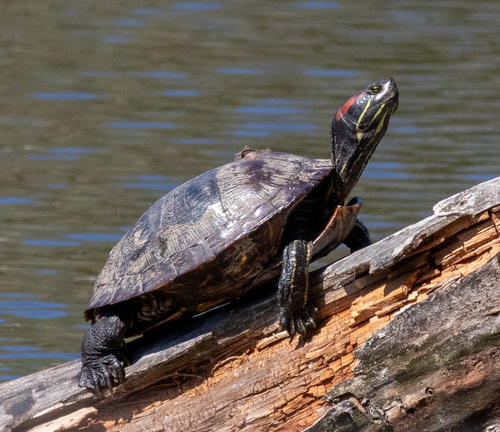
Pond Slider (Trachemys scripta)
Photo: Glenn Berry, CC0 · source

Pond Slider

Trachemys scripta

How to recognize it
A turtle with a yellow-striped head. Many have a red or yellow patch behind each eye.
Where and when
Logs and rocks in ponds and slow rivers, on sunny days spring to fall.
Lookalike
Painted turtle: smaller, with red marks around the edge of its shell.

Snap it for your Dex: Count the turtles on a log, then snap from the bank before they slide in.

DeKay's Brownsnake

Storeria dekayi

How to recognize it
A small brown snake, about as long as a ruler, with two rows of dark spots down its back.
Where and when
Under boards, rocks and leaves in gardens and parks in the East, spring to fall.
Lookalike
Young garter snakes: they have stripes instead of rows of spots.
Safety
Never pick up any snake. Let a grown-up lift boards and rocks.

Snap it for your Dex: Snap it where you find it, then let it be. It is harmless.

Gopher Tortoise

Gopherus polyphemus

How to recognize it
A large land tortoise with stumpy back legs and flat, shovel-like front legs.
Where and when
Sandy pine and scrub land in Florida and the Deep South. Look for half-moon burrow entrances.
Lookalike
Box turtle: smaller, with a high domed shell and yellow-orange marks.
Safety
Gopher tortoises are protected. Never touch them or block a burrow.

Snap it for your Dex: Snap it from a distance while it grazes near its burrow.

American Alligator

Alligator mississippiensis

How to recognize it
A huge dark reptile with a wide, rounded snout.
Where and when
Lakes, rivers, canals and swamps in the Southeast. Often only the eyes and snout show above water.
Lookalike
American crocodile (South Florida only): a narrower, pointed snout and lighter color.
Safety
Stay far back from the water's edge, never feed one, and keep pets on a leash.

Snap it for your Dex: Snap it with zoom from a boardwalk or path well back from the water.

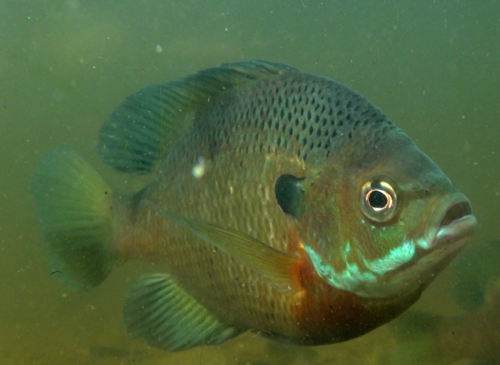
Bluegill (Lepomis macrochirus)
Photo: Kristiina Hurme, CC BY · source

Bluegill

Lepomis macrochirus

How to recognize it
A flat, round fish with a dark ear flap and a dark smudge at the back of its top fin.
Where and when
Clear, shallow water by docks and weeds on warm days.
Lookalike
Pumpkinseed: orange spots and a red tip on the ear flap.
Safety
Stay with a grown-up near water.

Snap it for your Dex: Look straight down from a dock on a sunny day so the glare doesn't hide them.

Make it a scavenger hunt

Print the free checklist with every find on this page, hand it to your kid with a pencil, and set a timer. Check off each one you spot. Or play it in the app: Spot it, Snap it, Collect it. Every photo becomes a verified card in your kid's Dex.

Or play it in the app

Full frog, lizard and pond checklist

More frogs, toads, lizards, snakes and fish for the hunt.

Frogs and toads

FindWhere to lookWhen
Blanchard's Cricket FrogAcris blanchardiLook for them along the edges of water.Spring and summer evenings are best for hearing their calls
Cope's Gray Tree FrogDryophytes chrysoscelisListen for their loud, buzzing call at night, especially after rain.Nighttime, especially spring and summer evenings for calling
Squirrel Tree FrogDryophytes squirellusLook on leaves and branches after rain.After dusk, particularly after rain, spring and summer
Pacific chorus frogPseudacris regillaListen for their loud 'rib-bit' call, especially at night or after rain.Spring and winter evenings, especially after rain, is when their calls are loudest
Cuban Tree FrogOsteopilus septentrionalisLook on windows at night, on house walls, or in moist gardens.Invasive in Florida. Wash hands after touching.Nighttime, especially after rain or during warm evenings
Gulf Coast ToadIncilius nebuliferListen for their long, low trill after a rain shower, especially at night.Night, especially after rain, during warmer months

Lizards

FindWhere to lookWhen
Common Side-blotched LizardUta stansburianaLook for them on sunny rocks or logs.Daytime, especially when the sun is warm, from spring through fall
Texas Spiny LizardSceloporus olivaceusLook on tree trunks, fence posts, or rock walls where the sun shines.Mid-morning to late afternoon on warm, sunny days
Southern Alligator LizardElgaria multicarinataLook for them basking on sunny rocks, logs, or fences.Warm, sunny days, especially in the morning and late afternoon
Western WhiptailAspidoscelis tigrisLook for them scurrying across open, sunny spots, often near bushes or rocks.Warm, sunny parts of the day, particularly mid-morning or late afternoon
Mediterranean House GeckoHemidactylus turcicusLook on walls, fences, and under outdoor lights at night.Not native, but harmless.Nighttime, especially warm evenings
Green IguanaIguana iguanaLook up in trees, on fences, or sunning themselves on rocks in very warm, sunny places.Invasive in South Florida.Warm, sunny days, especially in the morning

Snakes

FindWhere to lookWhen
Gopher SnakePituophis cateniferLook for them in open fields, rocky areas, or along trails.Warm, sunny days, especially spring through fall
Western RatsnakePantherophis obsoletusLook for them climbing trees, rafters in old barns, or basking on rocks.Warm days, especially during spring, summer, and fall

Pond fish

FindWhere to lookWhen
Largemouth BassMicropterus nigricansLook for them in freshwater bodies, especially near submerged plants, fallen logs, or rocky areas.Morning and evening, especially during warmer months

Pond and reptile safety

  • Wash hands after touching frogs or toads. Their skin can carry germs, and some toads ooze a mild toxin.
  • Never handle snakes, even small ones. Snap from a step back and let them go.
  • Stay far from alligators and the water's edge where they live. Never feed one, and keep pets leashed.
  • Kids should hunt near water only with a grown-up.

Why kids keep going

Spot, Snap, Collect

Kids find something real outside and photograph it. That's the whole game, and it only works outdoors.

Every card is verified

HabitatLab checks each photo and identifies the species, so every card in the Dex is a real find your kid made, not a guess.

You see what they learned

The Grown-Up Field Report shows you what your kid found, the science behind it, and questions worth asking at dinner.

Questions parents ask

What pond animals can kids find?

Frogs and toads at the edges, turtles basking on logs, bluegill near docks, dragonflies over the water and herons in the shallows. A slow walk around one pond can turn up all of them.

What is the difference between frogs and toads?

Frogs usually have smooth, damp skin and long legs for jumping, and they stay near water. Toads have dry, bumpy skin and shorter legs, and they hop around gardens far from water.

What lizards live in my backyard?

In the Southeast, the brown anole and little brown skink. In the West, the western fence lizard and side-blotched lizard. In Texas, the Texas spiny lizard. Check sunny fences, walls and rocks.

Is there a frog identification app for kids?

HabitatLab lets kids snap a frog, lizard or turtle and identifies it. Each verified find becomes a card in their Dex.